

Why Modern Factories Prioritize Transport Automation
Many managers focus on increasing production speed while overlooking logistics stability. In reality, production capacity is capped by whether materials arrive at the right place, at the right time, every shift.
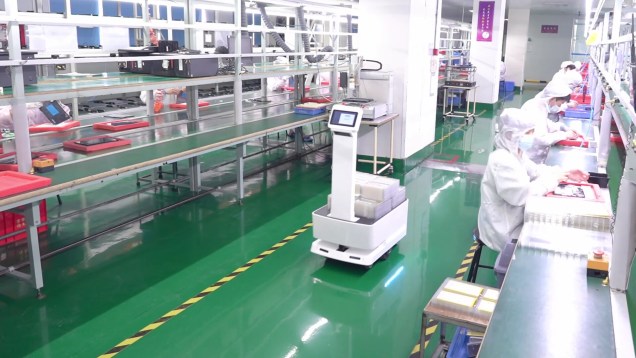
Even the most advanced production line slows down if logistics cannot keep pace. This is why transport automation has become central to factory upgrades, and why Reeman AMR material handling robots are being adopted at accelerating rates.
Manual Transport Cannot Meet Stability Requirements
Transport is not simply moving goods from point A to point B. The real challenge is ensuring consistent, punctual delivery across every shift and every process. Manual labor cannot maintain this level of stability.
Labor shortages, night-shift difficulties, safety risks, and management complexity have turned transport roles into high-cost, high-variability positions. Many factory owners now recognize that critical processes cannot depend on unstable factors.
AMR Architecture Designed for Real Factory Conditions
Reeman AMRs rely on LiDAR and vision-based autonomous navigation rather than fixed routes. Unlike traditional AGVs, they do not require site reconstruction and can be deployed quickly by scanning and mapping the environment.
They coexist with people and forklifts without disrupting traffic, making them ideal for factories with frequent layout changes or flexible production lines. Deployment time and transformation cost are both significantly reduced.
Multi-Robot Coordination That Improves Under Pressure
Reeman’s scheduling system enables dozens of AMRs to collaborate dynamically within the same facility. Tasks are prioritized automatically, routes are optimized in real time, and congestion is avoided through intelligent coordination.
When workload increases, robots remain stable and predictable. Unlike manual operations, performance does not degrade under pressure.
Turning Logistics Into Measurable, Optimizable Data
Every transport task is logged with timestamps, routes, and execution status. What was once managed by experience becomes transparent and measurable.
This data-driven visibility allows factories to identify real bottlenecks and optimize logistics flow. Many companies eventually discover that unstable production rhythms were caused not by equipment, but by opaque and unmanaged transport processes.
Stability as a Long-Term Competitive Advantage
Speed can always be increased later, but stability builds long-term competitiveness. Reeman AMR material handling robots are becoming essential infrastructure for factories seeking consistent output, lower risk, and scalable automation.
더 보기: 리만봇

How Can Autonomous Forklifts Turn Existing Stretch Wrappers into Automated Packaging Workstations?

자율주행 지게차는 자동문 및 스트레치 래퍼와 어떻게 통합될 수 있을까? REEMAN 공장 사례 연구

REEMAN Titan Mini가 맞춤형 포크로 비표준 탱크 트롤리를 처리하는 방법

배달 로봇은 아파트 건물에서 어떻게 엘리베이터를 이용할 수 있을까? REEMAN YIMA 설명

REEMAN, 전문 테니스 시설을 위한 상업용 자율 테니스 볼 수거 로봇 출시 예정

Humanoid Robot Prices: What the Current Generation Costs and Why