
From Manual to Autonomous: Forklift Logistics Evolution
Дата публикации

Introduction
Forklifts have long been the backbone of warehouse and factory logistics. From the early manual forklifts powered entirely by human operators to today’s autonomous forklifts and AMRs, the industry has undergone a remarkable transformation. This shift has been driven by the need for greater efficiency, safety, and scalability in material handling.
In this article, we trace the evolution of forklift logistics, highlighting how new technologies are reshaping warehouses worldwide.
The Era of Manual Forklifts
Manual forklifts first appeared in the early 20th century, enabling workers to lift and transport heavy loads with relative ease. These machines revolutionized logistics by:
-
Reducing manual labor fatigue
-
Increasing load capacity per worker
-
Enabling vertical storage with hydraulic lifting
However, manual forklifts required constant human operation, which limited efficiency and introduced risks such as operator error and workplace accidents.
The Transition to Semi-Automated Systems
As demand for faster logistics grew, warehouses began adopting semi-automated solutions. These included forklifts with enhanced safety features, better ergonomics, and early automation add-ons such as guided steering.
While these improvements reduced strain on operators, warehouses still relied heavily on human labor for control and navigation.
The Rise of Autonomous Forklifts
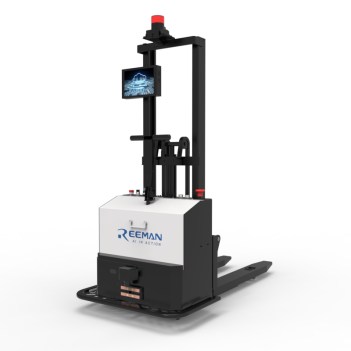
Today, autonomous forklifts and AGV forklifts are transforming warehouse operations. Unlike manual models, these machines use AI-driven navigation technologies such as:
-
Laser (LiDAR) Navigation: High-precision mapping for structured layouts.
-
Vision Navigation: Camera-based adaptability for dynamic spaces.
-
VSLAM (Visual Simultaneous Localization and Mapping): A combination of cameras and AI that allows real-time mapping in changing environments.
These advancements enable forklifts to:
-
Operate 24/7 without breaks
-
Safely avoid obstacles and people
-
Integrate with Warehouse Management Systems (WMS)
-
Support flexible layouts without costly infrastructure changes
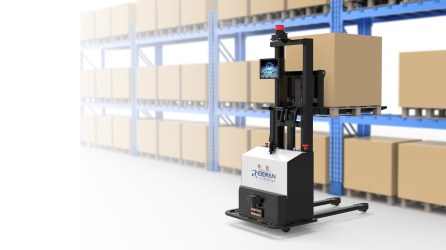
Companies like Reeman have introduced unmanned forklifts and AMRs capable of handling European standard pallets in narrow aisles, demonstrating how robotics adapts to evolving supply chain needs.
Benefits of Autonomous Forklifts
The adoption of autonomous forklifts delivers significant advantages:
-
Cost Efficiency – Reduced labor costs and fewer accidents lower expenses.
-
Scalability – Fleets can be expanded quickly as demand grows.
-
Safety Improvements – AI-powered obstacle detection reduces workplace injuries.
-
Higher Throughput – Robots work continuously, improving order fulfillment speed.
Challenges of Automation
Despite the benefits, companies must overcome challenges such as:
-
High upfront investment in robotic fleets and software integration.
-
Training needs for staff to adapt to automation workflows.
-
Network reliance, requiring stable Wi-Fi or 5G for real-time control.
The Future of Forklift Logistics
The future points toward fully AI-integrated warehouses where autonomous forklifts collaborate with robotic arms, drones, and smart inventory systems. With advancements in machine learning and predictive analytics, forklifts will not just transport goods but also optimize inventory and anticipate supply chain demands.
Conclusion
The journey from manual forklifts to fully autonomous systems reflects the broader transformation of modern logistics. While manual forklifts laid the foundation, autonomous solutions are now redefining speed, safety, and scalability in warehouses.
By adopting these innovations early, businesses can secure a competitive advantage in efficiency and cost reduction, ensuring success in the era of intelligent logistics.
🔗:The Rise of Smart Warehouses: How Robotics and AI Are Creating the Future of Logistics
Ещё в Автономные вилочные погрузчики

Как автономные вилочные погрузчики могут интегрироваться с автоматическими дверями и стретч-обмотчиками? Кейс завода REEMAN

Создан для дождя: всепогодный уличный автономный вилочный погрузчик REEMAN Waterproof Ant

Как REEMAN Ironhide автоматизирует 160–200 рейсов с паллетами в день с помощью вызова одной кнопкой

Аренда или покупка автономного погрузчика 2T: расчёт ежемесячных эксплуатационных расходов в тяжёлом машиностроении

Аренда или покупка автономного вилочного погрузчика: разбор TCO для противовесной модели 1,2 т

Автономный вилочный погрузчик Titan Mini против ручной тележки: что лучше подходит для проходов шириной 1,8 метра?